Micron Technology (MU) Has Fallen in All 7 Midterm Windows as the Next One Approaches
Micron Technology is hovering near record highs after a huge AI-fueled earnings beat, just weeks before a short midterm-election seasonal window that has never been kind to the stock.
Key takeaways
- Micron Technology has posted losses in this 6-day midterm-election window in all 7 historical cycles, aligning with a short trade direction.
- The upcoming window runs from Apr 2 through Apr 10, 2026, and has averaged a 5.17% move in the trade direction.
- Percent Profitable stands at 100%, with 7 winners and 0 losers across the last seven midterm election years.
- Intraperiod swings have been sharp, with best-case rallies and worst-case drawdowns both reaching high single digits in some years.
- Micron is trading about 1.4% above its 52-week high after a massive AI-driven earnings beat, setting up a clash between momentum and seasonality.[1][2][8][10]
- Options traders had already been pricing an 8–9% post-earnings move with a bullish tilt, adding another layer of positioning risk into this window.[12]
According to historical data from TradeWave.ai, this early-April stretch in midterm election years has behaved very differently from an average week for Micron. The next section walks through what that pattern has looked like and how it fits into today’s setup.
Seasonal window
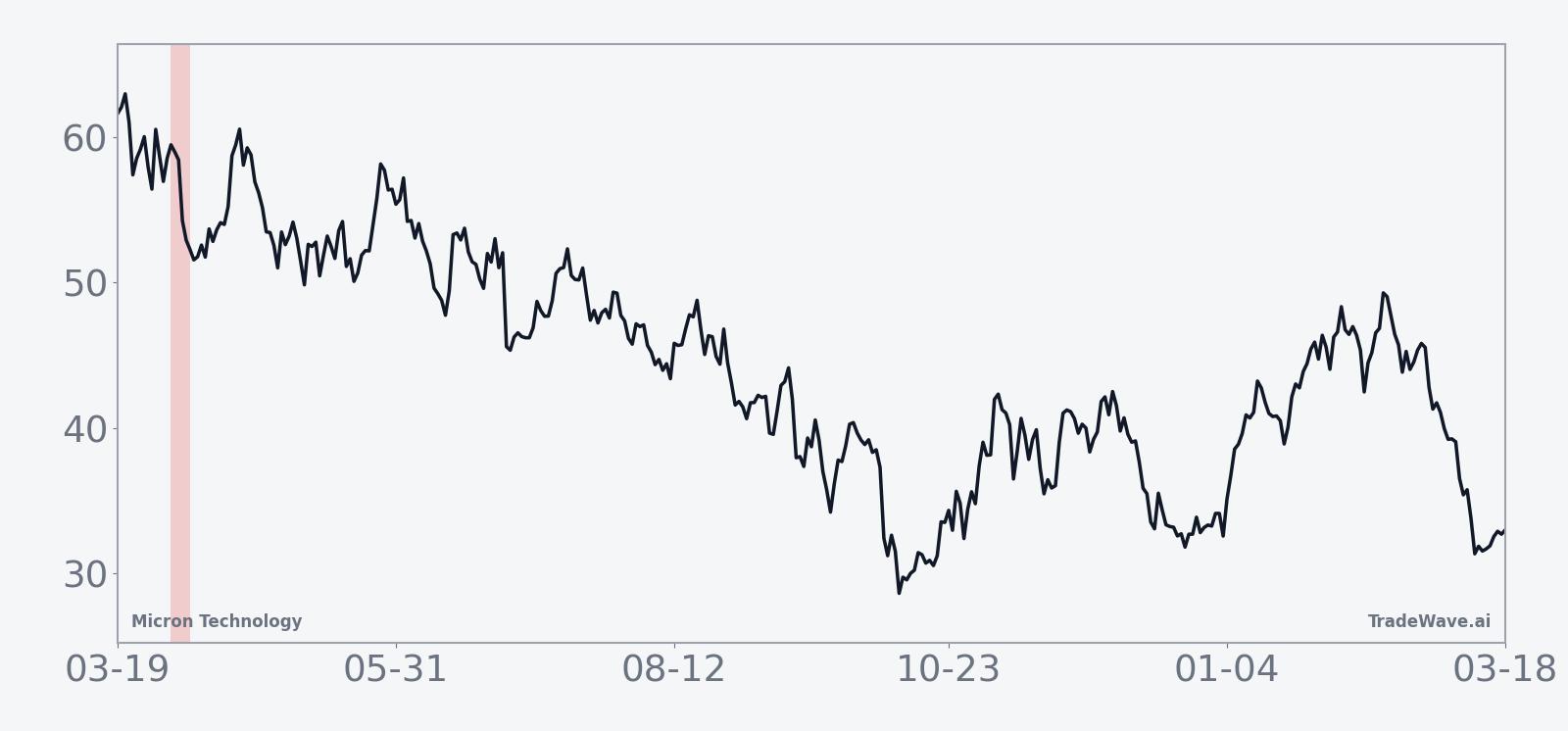
Micron Technology has declined in this early-April midterm-election window in all 7 historical cycles, with an average move of 5.17% in favor of a short position. The next iteration begins on Apr 2 and runs for six trading days, with the stock currently at $461.73, about 1.4% above its 52-week high of $455.50.[1][2][8][10] That combination of a clean seasonal record and stretched price levels turns a routine calendar blip into a window traders will be watching closely.
Presidential election-cycle grouping matters here because Micron’s demand, pricing power and investor risk appetite are all tied to policy-sensitive AI and data-center spending. Midterm election years often bring more noise around regulation, fiscal priorities and tech oversight, which can amplify short, sharp swings in high-beta names even when the longer-term AI story stays intact.
This seasonal window begins on Apr 2 and spans 6 trading days, covering the last seven midterm election years in the dataset. The trade direction is short, meaning the pattern is defined around Micron tending to trade lower over the window, not higher. Across those seven cycles, Percent Profitable is 100%, with 7 winners and 0 losers, and the average profit in winning years is 5.17%.
Because every year in the sample was a winner for the short side, the all-years average matches that 5.17% figure. The median outcome is a 4.63% move in the trade direction, which shows that the typical short window has been meaningful rather than marginal. Add it up: a 41% cumulative gain across the seven midterm windows for traders aligned with the short bias.
The per-year table shows how that has played out in practice. In 2014, Micron dropped 10.84% over the window, with the worst intraperiod drawdown from entry reaching 12.9% before the trade finished in the money. In 1998, the stock fell 9.18% across the window, with a maximum adverse move of 9.78% against the short before the decline stuck. Even the milder years, such as 2010’s 0.38% net move, still finished slightly in favor of the short side.
MFE/MAE, which capture the best and worst intraperiod excursions from the entry price, underline how punchy this stretch can be. Maximum favorable moves have reached as high as 6.87% in 2018, while maximum adverse moves have pushed into the high single digits in several cycles. In plain English, this has been a window where Micron often whipsaws before settling lower, rewarding patience but punishing tight risk limits.
The historical trend curve for this window slopes steadily in the trade direction rather than relying on a single outlier year. The average path shows Micron starting to weaken early in the six-day span and continuing to drift lower into the close, with only modest intraday recoveries. That consistency across very different macro backdrops, from the dot-com era to the 2022 downturn, is what makes this pattern stand out.
Year-by-year bars with maximum favorable and adverse moves show how often Micron has swung hard before finishing lower.
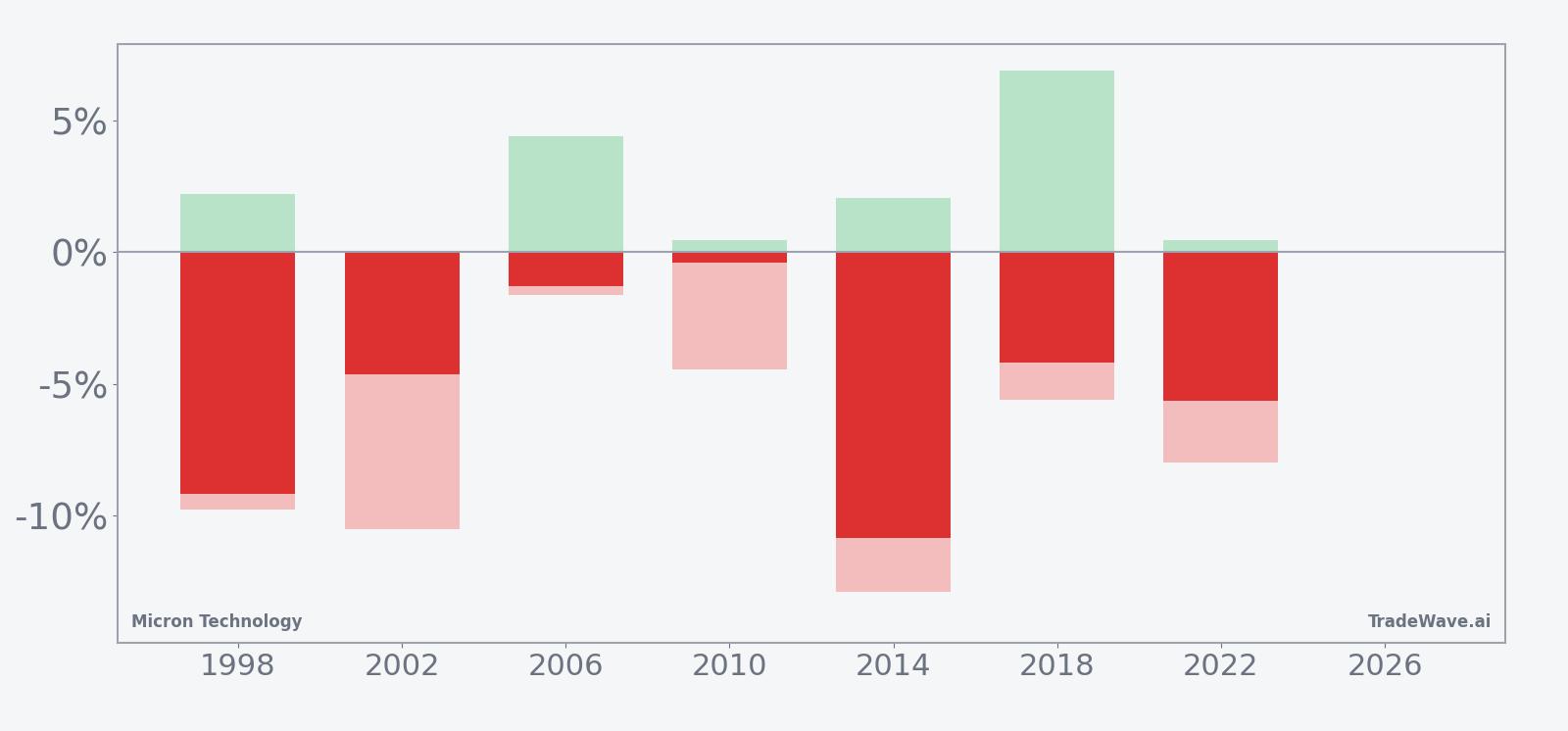
History does not guarantee future results, and the worst intraperiod drawdowns in this window have been large even in years that ultimately finished in favor of the short side.
Price and near-term drivers
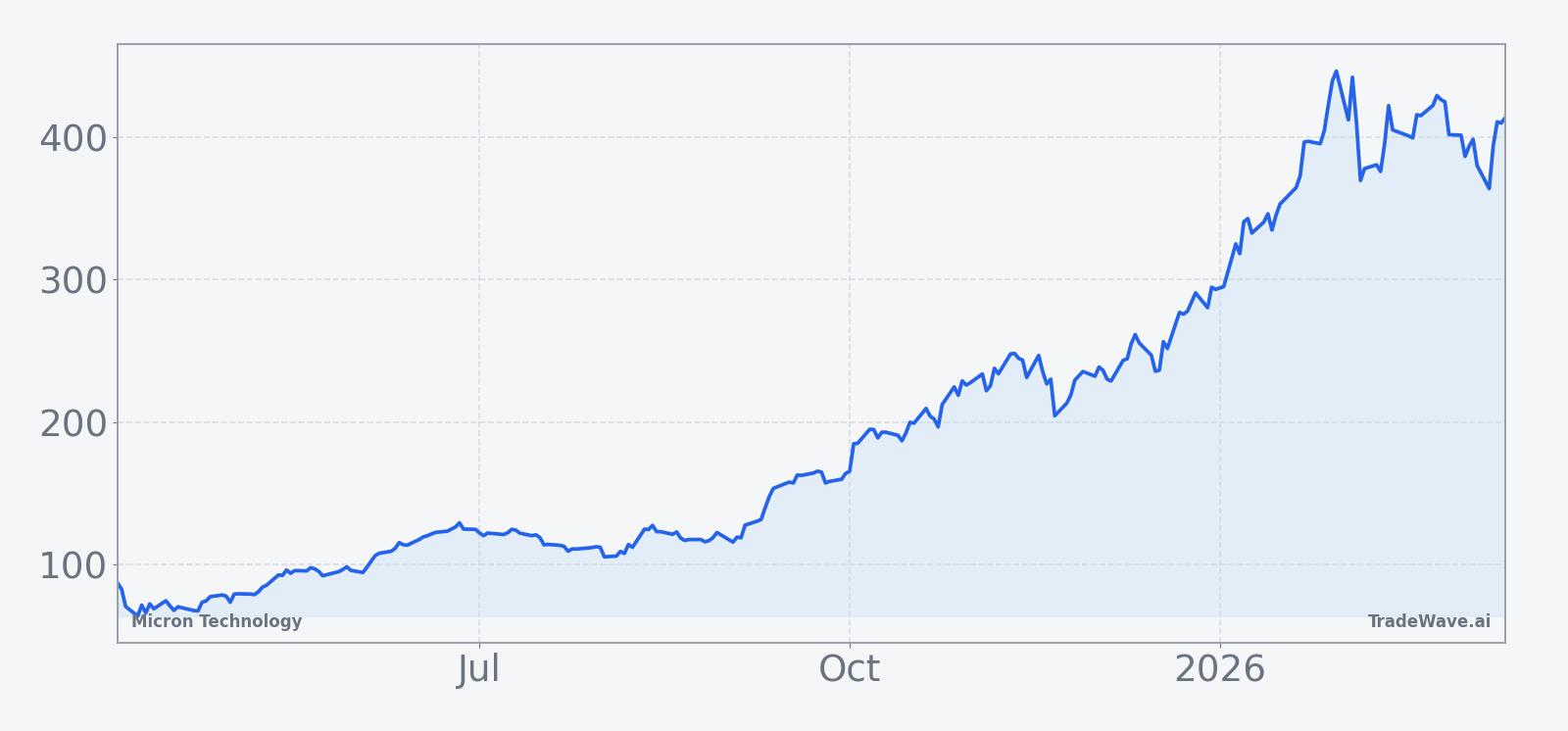
Micron shares closed Thursday at $461.73, essentially flat on the day but sitting about 1.4% above their 52-week high after a powerful run that has turned the stock into one of the purest AI memory plays in the market.[1][2][8][10] The latest leg higher followed a blowout Q2 fiscal 2026 report on Mar 18, where Micron delivered 196.4% year-on-year revenue growth to $23.86 billion and earnings of $12.20 per share, crushing Wall Street estimates and reinforcing the idea that AI-driven demand is overwhelming supply in high-bandwidth memory and advanced DRAM.[1][2]
Management guided for Q3 revenue of $33.5 billion, EPS of $19.15 and gross margins around 81%, a level more often associated with leading GPU designers than memory manufacturers.[1] That guidance leans heavily on continued AI server build-outs and tight supply in both DRAM and NAND, themes that have dominated Micron’s narrative since late 2025.[1][2][8][10] In Dec 2025, Micron had already posted strong Q1 results as AI demand accelerated, and by early 2026 analysts were openly debating how long such elevated margins could last in a notoriously cyclical industry.[3][4][7][10]
Options traders were ahead of the move. On Mar 18, activity in Micron contracts skewed bullish, with the options market pricing an 8–9% post-earnings swing as traders positioned for a sizable upside reaction.[12] That kind of pre-event positioning can leave the tape vulnerable to sharp reversals if expectations get too far ahead of fundamentals, especially when the stock is already extended and liquidity is concentrated in short-dated calls.
At the macro level, Micron sits at the intersection of several powerful forces. AI infrastructure spending remains one of the few areas where corporate budgets are expanding aggressively, even as investors weigh the path of interest rates and the durability of the broader economic cycle.[1][2][8][10] In midterm election years, debates over industrial policy, export controls and data regulation often intensify, which can inject headline risk into high-profile chip names without necessarily changing the long-term demand story.
The chart below situates the latest move in its recent multi-month context.
What to watch as the window opens
The key near-term test is whether Micron’s post-earnings momentum can overpower a midterm-election window that has historically favored short positions. Traders will be watching how the stock behaves as Apr 2 approaches, particularly if it continues to trade above the prior 52-week high and stretches further away from its 50-day moving average of $387.87.[1][10]
On the policy side, any fresh headlines around AI regulation, export controls on advanced memory or changes to data-center incentives could act as catalysts inside the window. Midterm election years often bring more pointed scrutiny of big-tech supply chains, and Micron’s role in high-bandwidth memory for leading AI accelerators keeps it squarely in that conversation.[2][8][10]
Positioning will matter as much as headlines. If the bullish options skew that built ahead of earnings persists or even intensifies, it could set the stage for either a squeeze higher or a sharp unwind if the stock stalls.[12] Watch whether call volumes remain elevated and whether implied volatility stays bid into early April; a fade in either could signal that the market is less willing to pay up for upside just as the historical short window opens.
Finally, price action inside the six-day span will offer a real-time check on the seasonal pattern. A quick break lower that lines up with prior midterm years would reinforce the idea that this window remains a pocket of vulnerability for Micron, even in a powerful AI uptrend. A clean hold or push higher through the window, by contrast, would mark the first real break in a seven-for-seven record and suggest that the current AI cycle is rewriting at least one small piece of the historical playbook.
Sources
- [1] Seeking Alpha – “Micron Just Smashed Estimates - Buy The Dip (NASDAQ:MU)” (Mar 18, 2026)
- [2] CNBC – “Micron earnings are out after the bell following a big move higher. What analysts expect” (Mar 18, 2026)
- [3] Yahoo Finance – “Micron Target Raised to $500 After Strong Q1 Earnings Beat” (Dec 23, 2025)
- [4] Yahoo Finance – “Micron (MU) Price Target Raised on Tight Memory Supply Through 2026” (Jan 10, 2026)
- [5] Seeking Alpha – “Micron stock jumps after raising Q4 guidance” (Aug 11, 2025)
- [7] Business Insider – “Wall Street is raving about Micron earnings” (Dec 18, 2025)
- [8] Seeking Alpha – “Micron: Memory Downcycle Sooner Than Expected” (Mar 16, 2026)
- [10] Zacks Investment Research – “The Surge in Micron Technology Stock Looks Poised to Continue” (Feb 13, 2026)
- [12] Seeking Alpha – “Micron options lean bullish ahead of earnings with 8 percent move priced in” (Mar 18, 2026)
- [14] Yahoo Finance – “Micron Earnings Boost Expected as Nvidia Expands HBM Usage” (Mar 20, 2025)