Oracle Corporation (ORCL) Has Rallied 8 of 8 Midterm May Windows, Averaging 36.12% Gains
Oracle Corporation is heading into a historically powerful midterm-year seasonal window just as its stock trades near record highs after an AI-fueled earnings surge, raising the stakes for any pullbacks or breakouts in the months ahead.

What is the seasonal pattern for Oracle Corporation (ORCL)?
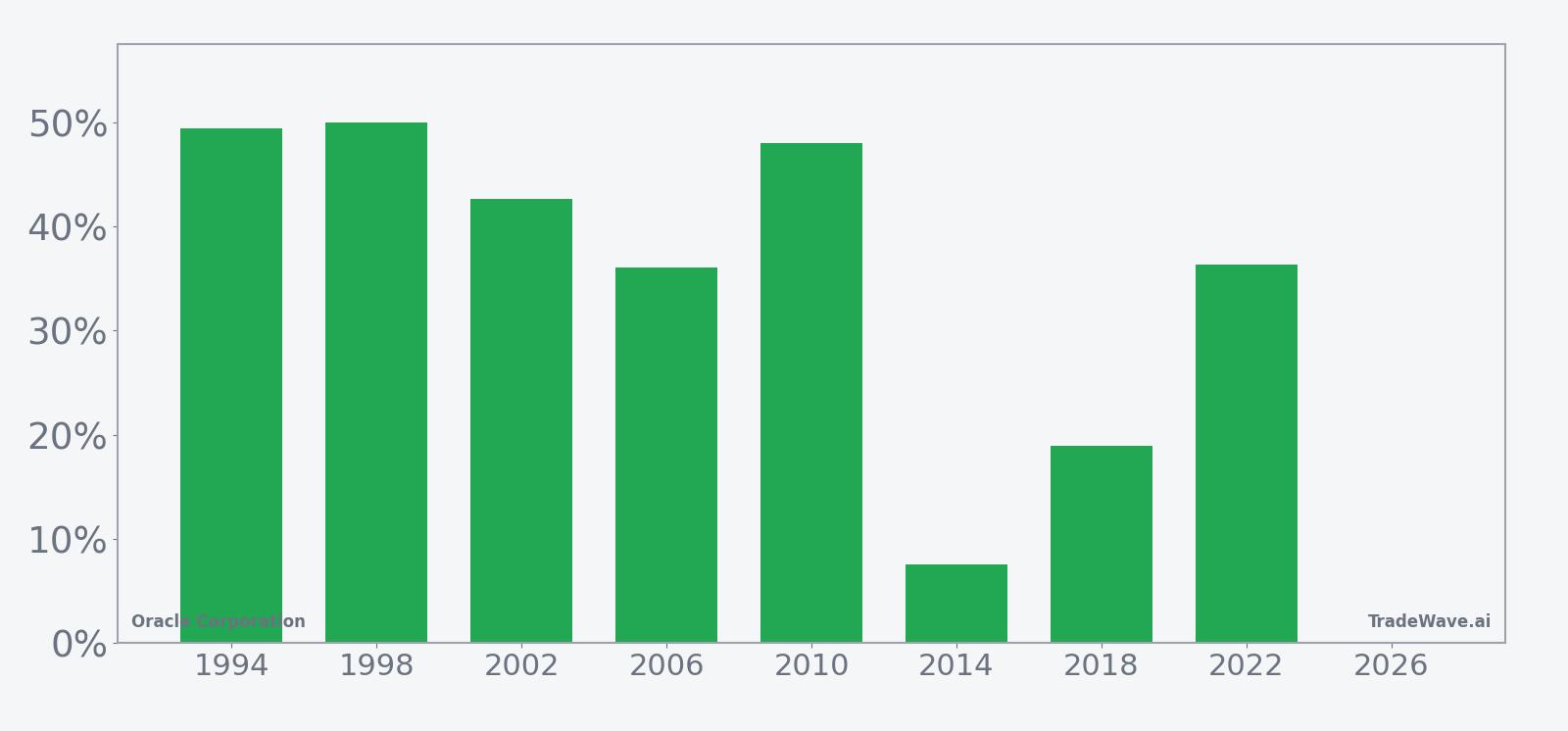
Oracle Corporation has risen in 8 of 8 midterm-election-year windows starting in mid-May, with an average gain of 36.12% in winning years.
- 8 for 8 in this window, with Oracle averaging 36.12% gains across all winning years over the 357-day stretch.
- The upcoming window begins on May 12, 2026 and runs for 357 trading days, covering the late midterm year into the pre-election year.
- Percent Profitable is 100%, with 8 winners and 0 losers across the last eight midterm election years in this specific Oracle trading window.
- Average winner gains cluster around a 39.49% median profit, with a cumulative return of 1,023% across the sample.
- The TradeWave Ratio of 1.27 suggests price has typically traveled meaningfully in the long direction within the window, while intraperiod drawdowns have still reached double digits in several years.
- Historical maximum favorable moves have topped 100% in the strongest years, but adverse excursions have reached roughly 30% in the weakest stretches before recovering.
According to historical data from TradeWave.ai, this midterm-election-year window for Oracle behaves very differently from an average year, with a long track record of strong but sometimes volatile gains.
How has Oracle Corporation (ORCL) traded in past midterm-year windows starting in May?
Oracle Corporation has risen in all eight midterm-election-year windows that start around May 12 and run for roughly a year, averaging 36.12% gains with a 1,023% cumulative return across the sample. Today the stock closed at 178.34, up 5.0% on the day and about 48.0% below its 52-week high, after a powerful run that has already priced in a big chunk of the AI cloud story.[4][6]
Grouping the data by the presidential election cycle matters here because this window always lands in the midterm election year and then runs into the year before the presidential election, a phase that has often coincided with shifting fiscal priorities, regulatory resets and renewed risk appetite in large-cap tech. For Oracle, that combination has historically lined up with strong demand for enterprise software and cloud infrastructure as corporate IT budgets adjust to the policy backdrop.
Across the eight midterm-election-year samples, the Percent Profitable figure is 100%, with 8 winners and 0 losers, and a median profit of 39.49%. Average profit of 36.12% means the typical year in this Oracle seasonal trend has delivered a mid‑double‑digit gain over the 357-day stretch, even after including the softer 7.6% outcome in 2014. Add it up and the cumulative return across all eight windows is 1,023%, a striking record for a single recurring calendar slice.
The per-year table shows how wide the range of outcomes has been inside that winning streak. The strongest years include 1998, when Oracle gained 50.0% in the window with a maximum favorable move of 136.93%, and 2010, when the stock advanced 48.0% with a 49.47% peak run-up. The weakest year was 2014, when the net return was 7.6% and the best intraperiod rally reached only 12.02%, underscoring that even “always up” windows can deliver modest results when fundamentals or sentiment are less supportive.
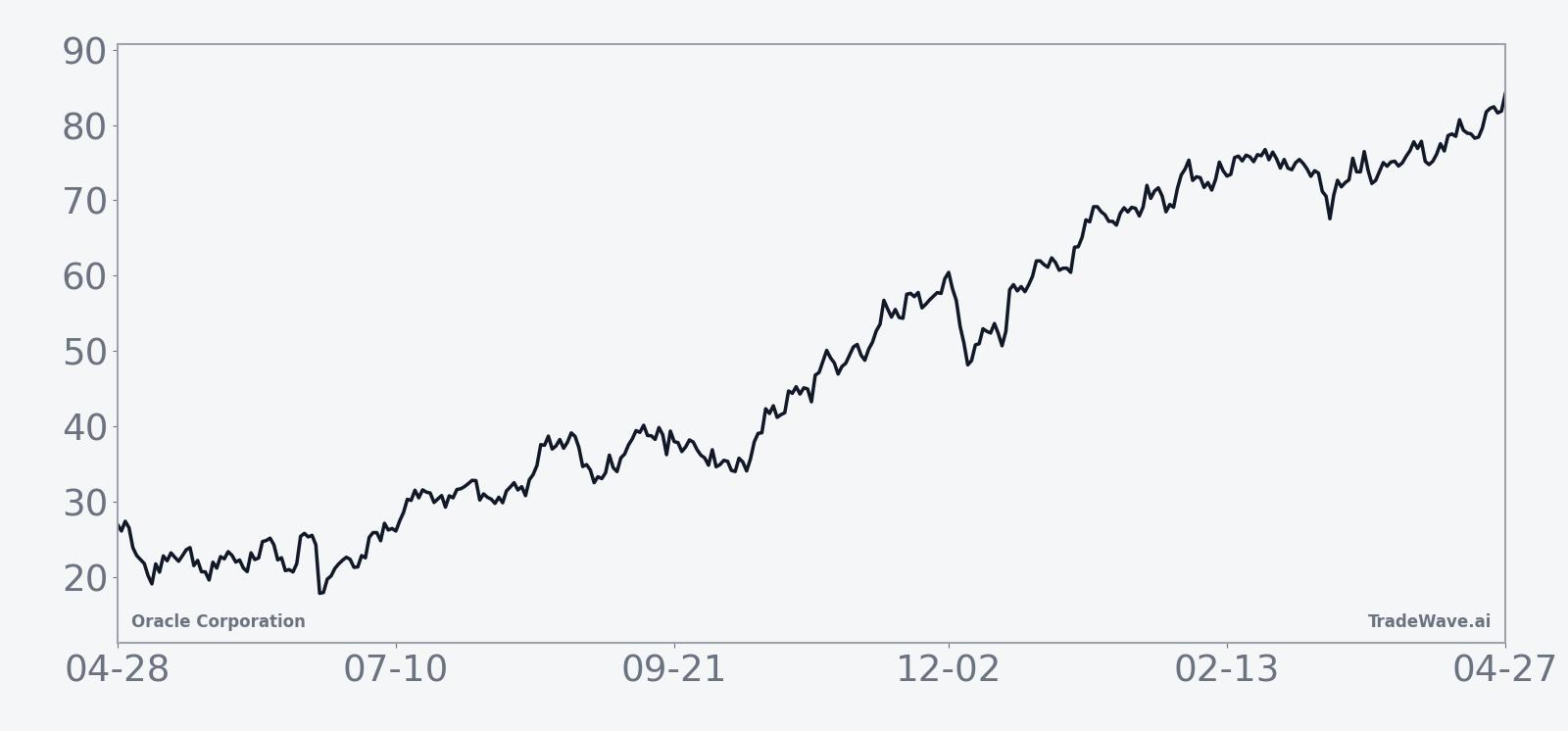
The historical seasonal average suggests that gains tend to build steadily rather than arriving in a single burst, with the trend line climbing through much of the window and only brief pauses. That fits a pattern where Oracle often benefits from multiple catalysts across the fiscal year, including recurring earnings reports and guidance updates that land inside this midterm-to-pre-election stretch.
A closer look at yearly net returns alongside peak rallies and worst drawdowns shows how much room Oracle has historically had to run, and how deep the air pockets can be along the way.
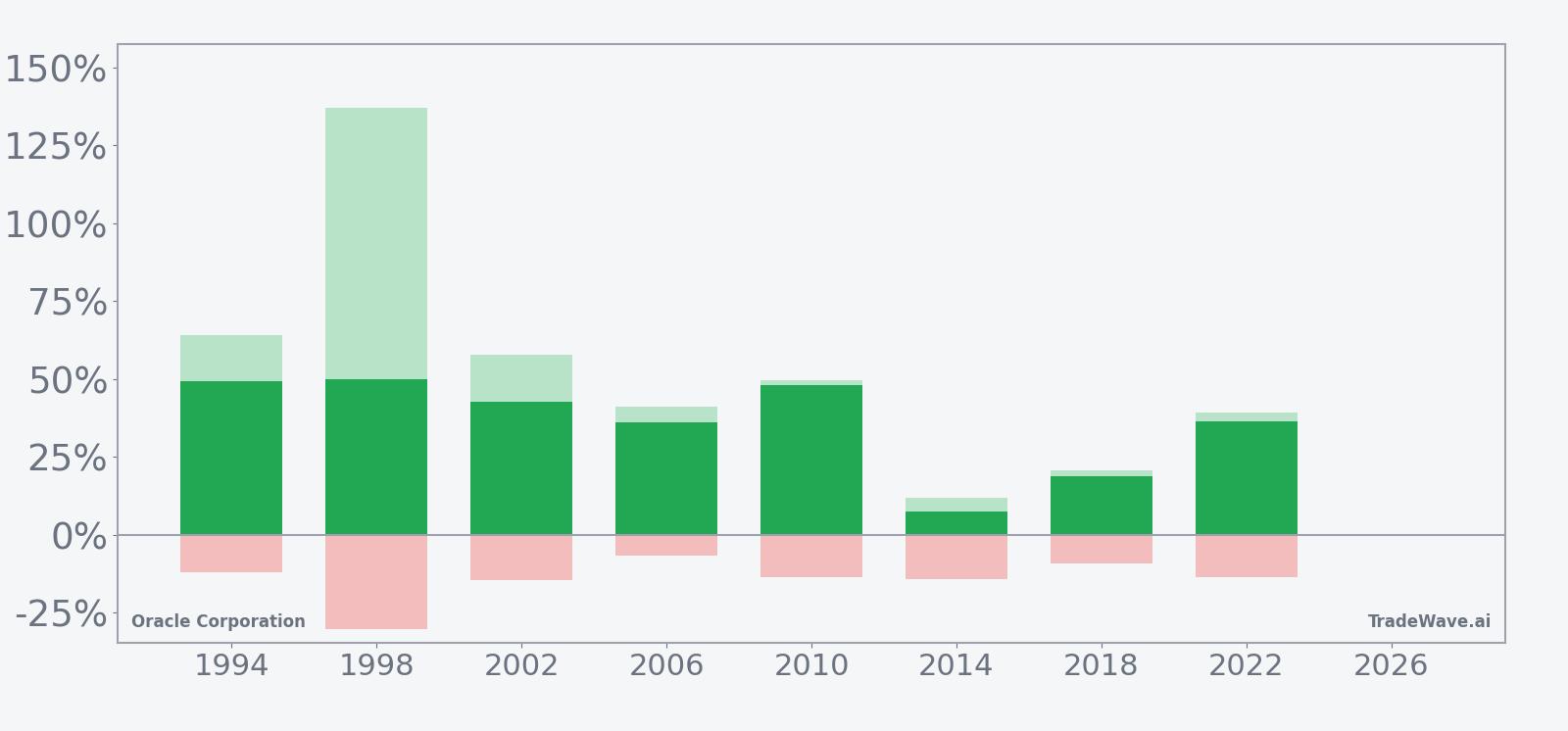
Maximum favorable excursions have been large in several years, with Oracle’s best point-to-peak moves ranging from roughly 39% to more than 130%, while maximum adverse excursions have often sat in the negative teens and reached about -30.21% in 1998. That mix of big rallies and meaningful drawdowns is captured in the TradeWave Ratio of 1.27 and a Sharpe ratio of 2.09, which together describe a historically rewarding but not low-volatility long setup. The pattern is clear: this window has favored longs in 8 of 8 years, but it has not spared traders from sharp pullbacks along the way.
History does not guarantee future results; even in windows where every past year was profitable, adverse excursions can be large and timing mistakes can be costly.
Why does Oracle Corporation (ORCL) follow this seasonal pattern?
One likely driver is the way Oracle’s fiscal calendar and product cycle line up with the political calendar, with key earnings reports and guidance updates clustering in the midterm year and the year before the presidential election. Analysts have pointed to periods of stronger enterprise IT spending and cloud migration when policy uncertainty eases and budgets reset, which often happens in this phase of the cycle.[5][6] The pattern may also reflect institutional portfolio repositioning into large-cap software and AI infrastructure names as investors lean into perceived policy stability ahead of the next presidential race.
What is driving Oracle Corporation (ORCL) today?
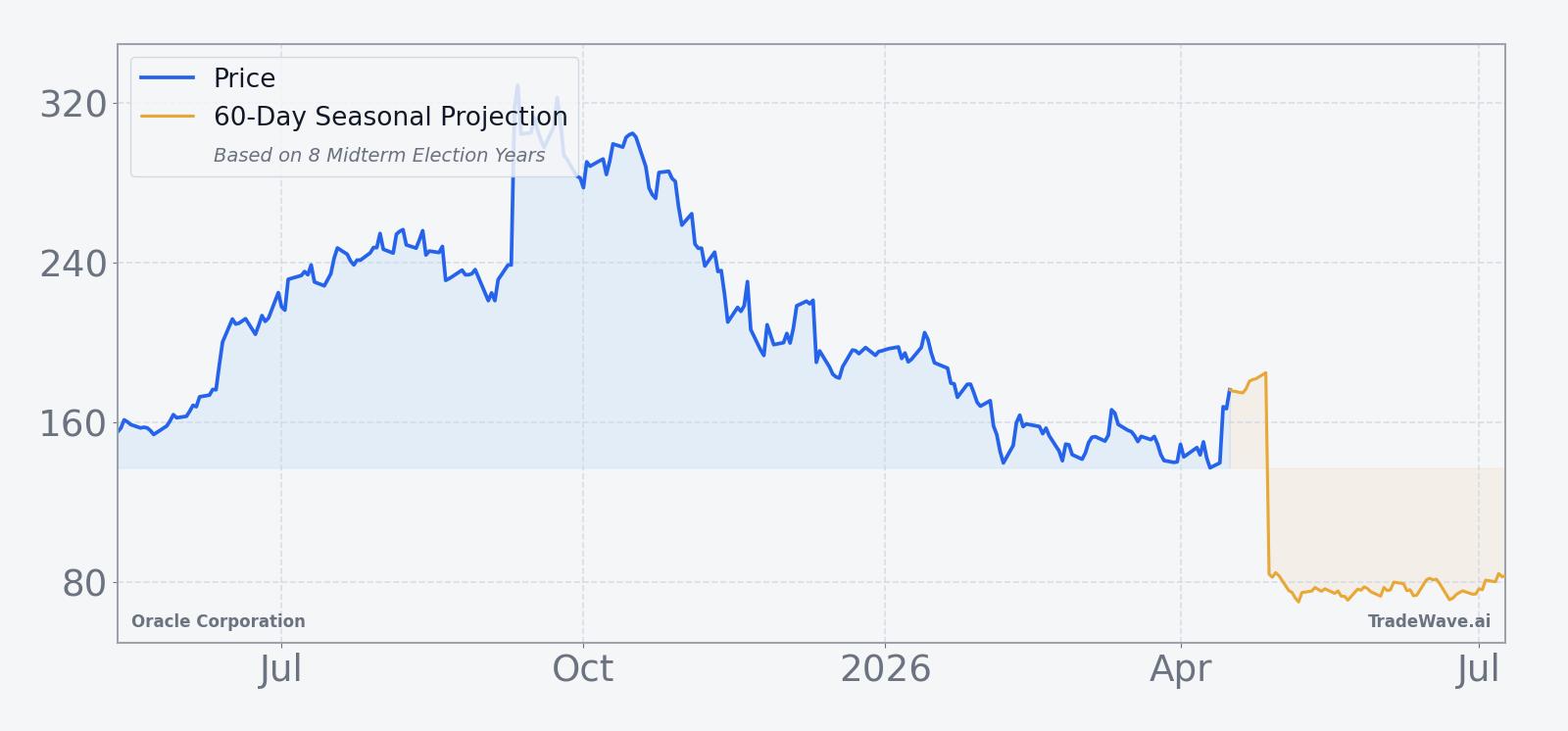
Oracle shares closed at 178.34 on Apr 17, up 5.0% on the day, extending a one-month gain of 16.64% as the stock trades well above its 50-day moving average of 151.00 on heavy volume of 46.6 million shares versus a 20-day average of about 26.2 million.[4][6] The move builds on a March earnings surge, when Oracle reported Q3 revenue of $17.19 billion and earnings of $1.79 per share, topping estimates and easing some concerns about the cost of its AI data center build-out.[4][6][7] Management also raised its fiscal 2027 revenue forecast to $90 billion and guided to 19% to 21% revenue growth in Q4, reinforcing the narrative that Oracle is becoming a key infrastructure player in the AI boom.[5][6]
That bullish earnings backdrop has not silenced skeptics. In January 2026, some hedge funds increased short positions in Oracle, arguing that the company’s aggressive AI investments and rising debt load could pressure margins if demand slows or pricing power fades.[8] The tug-of-war between AI-driven growth optimism and balance-sheet caution has turned Oracle into a high-conviction battleground name in large-cap software, with sharp post-earnings moves and elevated options activity around key events.
The chart below situates the latest move in its recent multi-month context, alongside a 60-day seasonal projection.
What should traders watch as this Oracle seasonal window approaches?
First, the calendar: the 357-day Oracle seasonal window tied to the midterm election year begins on May 12, 2026, and runs deep into the year before the presidential election. Historically, that stretch has delivered consistent gains for long positions, but the bars with maximum adverse excursions show that double-digit drawdowns have been common even in winning years. How Oracle behaves on pullbacks into that start date, especially around any macro or policy headlines, will be an early tell on whether this cycle is tracking the historical script.
Second, levels and volatility: with the stock trading far above its 50-day moving average and well off its 52-week high, traders will be watching whether dips toward the 150–160 zone attract buyers or whether any break of that band coincides with deeper adverse moves similar to the -14% to -30% drawdowns seen in prior windows.[4][6] Sustained strength above recent highs as the window opens would be more in line with the historical ORCL seasonal trend, while a failure to hold post-earnings gains would mark a clear divergence.
Third, the policy and AI backdrop: this midterm-to-pre-election phase often brings shifting rhetoric on regulation, data privacy and government tech spending, all of which matter for Oracle’s cloud and AI infrastructure ambitions.[5][6] Any signs that large enterprise or public-sector customers are slowing AI-related commitments, or that regulators are tightening rules around data and cloud concentration, could blunt the kind of steady cumulative gains seen in past cycles.
Finally, positioning and sentiment: short interest and hedge fund activity will be important to monitor after January’s increase in bearish bets against Oracle.[8] If shorts continue to build into the seasonal window and the stock still respects its historical pattern of strong midterm-year performance, the setup could fuel additional volatility as rallies force covering; if instead the stock stalls and shorts press their case, it would be one of the first times this particular Oracle trading window has failed to reward long exposure. For traders tracking seasonality, the next few weeks will show whether this 8-for-8 streak can extend into a ninth cycle or whether the AI era rewrites the script.
Sources
- CNBC, "What Wall Street analysts expect from Oracle earnings" (Dec 10, 2025).
- Yahoo Finance, "Mizuho Reaffirms Oracle (ORCL) Outperform Rating" (Jan 2, 2026).
- MarketWatch, "Oracle’s stock could surge 80%" (Nov 17, 2025).
- Yahoo Finance, "Oracle stock rockets on Q3 earnings beat" (Mar 11, 2026).
- Forbes, "How Oracle's Earnings Impacts Its 2026 Forecast" (Mar 11, 2026).
- Reuters, "Oracle rallies as strong revenue forecast eases concerns" (Mar 11, 2026).
- Forbes, "Oracle Earnings: Shares Pop After Tech Giant Beats Expectations" (Mar 10, 2026).
- Seeking Alpha, "Big Short Michael Burry bets against Oracle" (Jan 10, 2026).
- Financial Times, "Morgan Stanley thinks you should short Oracle" (Nov 27, 2025).
- Yahoo Finance, "Oracle (ORCL) Gets Price Target Cut From UBS" (Dec 14, 2025).
- Forbes, "Why Next Two Years Could Be Bad For Oracle" (Dec 23, 2025).
- Barron's, "Oracle Stock Jumps After Earnings Beat" (Mar 10, 2026).
About this seasonal analysis
Seasonal pattern data is sourced from TradeWave.ai, which analyzes historical price behavior across annual calendar windows going back up to 30 years. Read the full data methodology or the book The 100-Year Pattern by Afshin Moshrefi (2026 edition). Past performance of seasonal patterns does not guarantee future results. This article is for informational purposes only and does not constitute investment advice.