Illinois Tool Works (ITW) Faces 52-Day Midterm Window With 9-of-10 Losing Record
Illinois Tool Works is approaching a 52-day midterm-election seasonal window that has favored short setups even as the stock trades well below its 52-week high.

What is the seasonal pattern for Illinois Tool Works (ITW)?
Illinois Tool Works has fallen in 9 of 10 midterm-year windows starting around May 19, with an average 5.04% gain in winning short years.
- 9 for 10 in this window, with winning short years averaging 5.04% moves in the trade direction.
- The 52-day Illinois Tool Works trading window begins May 19 and is grouped across the last 10 midterm election years.
- Percent Profitable is 90%, with 9 winners and 1 loser for the short-side seasonal setup.
- Avg Profit - All, which includes both winning and losing years, comes in at 4%, pointing to a solid bearish seasonal bias.
- Historical intraperiod swings have been meaningful, with both strong favorable runs and sizable adverse drawdowns inside the window.
- The pattern aligns with a broader industrials seasonal outlook in midterm years, where policy and capex cycles often create choppy tape.
According to historical data from TradeWave.ai, this upcoming stretch for Illinois Tool Works has behaved very differently from an average early-summer period in past midterm election years.
How has Illinois Tool Works (ITW) traded in this midterm-year window?
Illinois Tool Works has been a remarkably consistent short-side winner in this midterm-election seasonal window, with 9 profitable years out of the last 10 and a 4% average move in favor of the trade. The next 52-day window begins on May 19, 2026, with ITW last changing hands at about $251, roughly 17.1% below its 52-week high of $303.16 and still above its 52-week low near $228. This combination of a clear historical seasonal trend and a stock trading well off its highs gives traders a defined backdrop as the midterm-year pattern comes back into play.
Because this pattern is grouped by the presidential election cycle, it reflects how ITW has behaved specifically in the year before the presidential election, across the last 10 midterm-election cohorts. That matters for an industrial name like Illinois Tool Works, where policy expectations, infrastructure spending debates, and corporate capex plans often shift meaningfully between the midterm year and the year before the presidential vote.
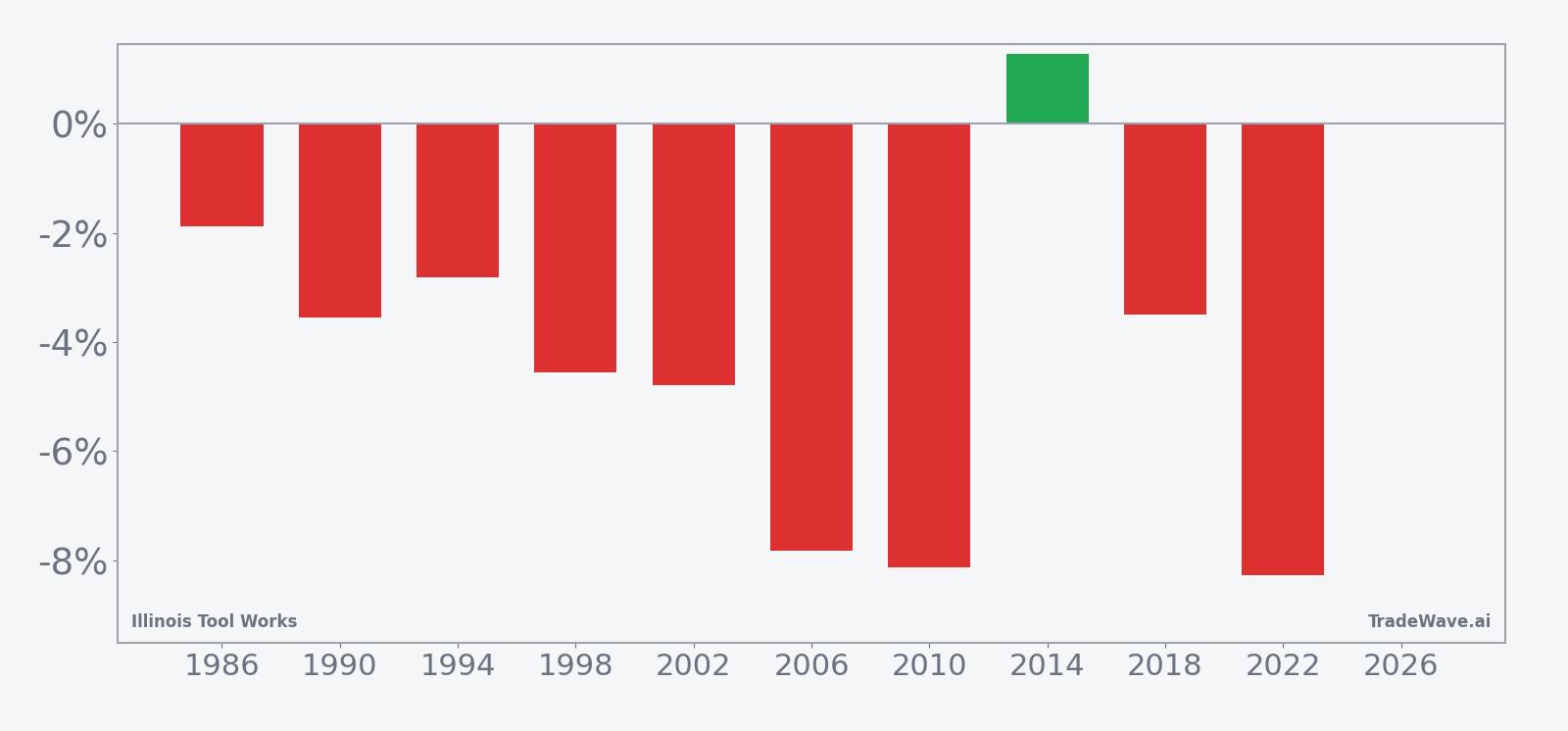
Historically, the trade direction for this window is short, which means negative returns for the stock have been favorable outcomes for the pattern. Across those 10 midterm-year samples, 9 years delivered profits for the short side and only 1 year finished against the trade. The average gain in winning years is 5.04%, while including the lone losing year pulls the all-years average to 4%, still a strong edge for a 52-day setup.
The per-year table shows that the weakest year for the short pattern came in 2014, when ITW actually rose about 1.27% over the window, turning that iteration into a loss for shorts. On the other side of the spectrum, 2022 stands out with an 8.28% net decline in the stock during the window, which translated into one of the best outcomes for the short strategy. Add it up: across the last 10 midterm-election cycles, this specific Illinois Tool Works seasonal trend has delivered a cumulative 53% return for the short side.
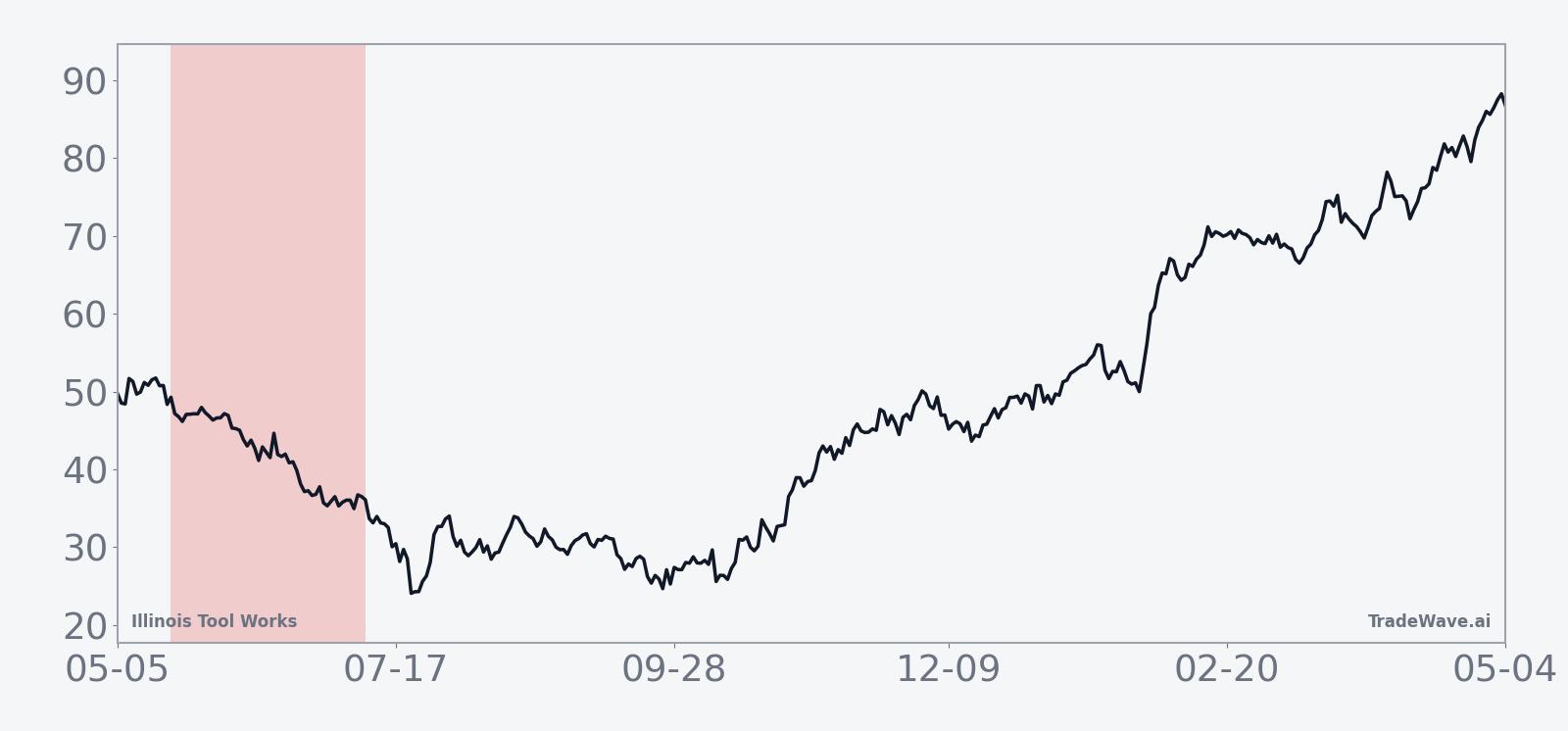
The historical seasonal average trend line slopes steadily in favor of the short direction, with much of the move typically accruing in the middle of the 52-day span rather than in a single sharp break. That profile suggests a tendency toward grinding weakness rather than one-off shock events, which can matter for traders thinking about position sizing and timing inside the Illinois Tool Works seasonal pattern.
Yearly net and intraperiod swings show how far ITW has tended to travel in both favorable and adverse directions during this window.
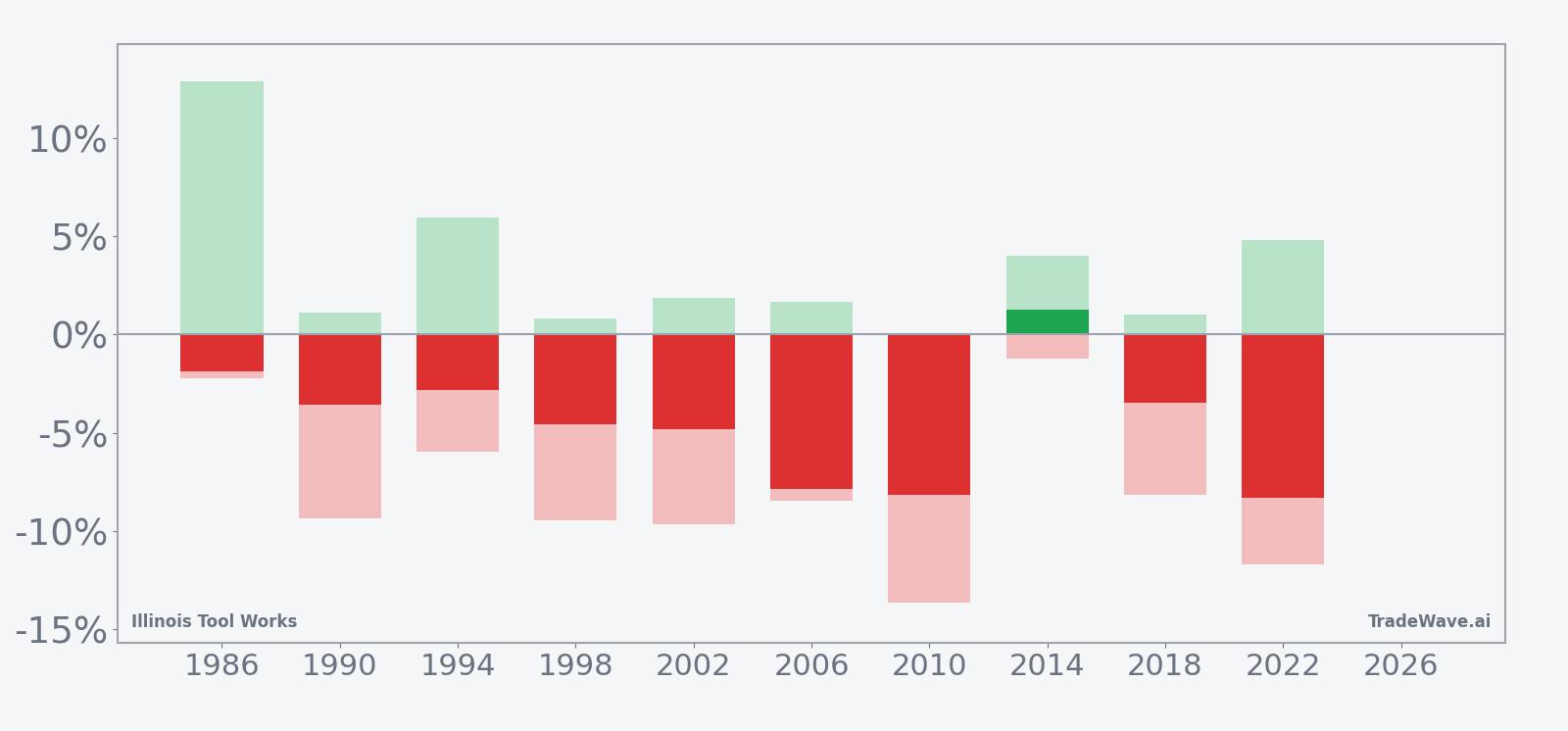
The combined net, maximum favorable excursion, and maximum adverse excursion bars highlight that even in winning short years, Illinois Tool Works has often seen sizable countertrend rallies inside the window. In 2010, for example, the stock ultimately fell about 8.13% over the period, but the worst intraperiod drawdown against the short was roughly 13.65%, showing how painful the path could be before the pattern paid off. In contrast, 1986 delivered a relatively modest 1.88% net decline with a favorable run of 12.85% at one point, underscoring that the TradeWave Ratio of 1.91 reflects meaningful travel in the trade direction relative to the final close.
The cumulative return chart for this Illinois Tool Works trading window reinforces the message: the line trends lower across the 10-sample history, with only brief pauses and one small countertrend bump. The Sharpe ratio of 1.26 for this short pattern is high for a 52-day seasonal setup, which means the historical risk-adjusted profile has been unusually clean for a single-stock seasonal trade.
History does not guarantee future results; adverse excursions can be large even in winning windows, and traders using this Illinois Tool Works seasonal trend still face meaningful drawdown risk.
Why does Illinois Tool Works (ITW) follow this seasonal pattern?
One likely driver is the way industrials and capital-goods names respond to policy and spending debates in the year before a presidential election, when companies refine multi-year capex plans and investors reassess margins. Analysts have also pointed to midyear portfolio rebalancing and sector rotation, which can pressure cyclical industrials like Illinois Tool Works if money rotates toward growth or defensives. This Illinois Tool Works seasonal trend may therefore reflect a recurring mix of policy uncertainty, order-book visibility, and institutional positioning that tends to lean against the stock in this specific midterm-year window.
What is driving Illinois Tool Works (ITW) today?
Illinois Tool Works shares last traded around $251.65 on May 5, 2026, down 1.7% on the day and roughly 17.1% below the 52-week high of $303.16, while still about 10.4% above the 52-week low near $228. The stock has slipped about 2.64% over the past month, with average 20-day volume near 1.07 million shares and a 50-day moving average around $270.07, which puts ITW clearly below its intermediate trend line and leaves the tape looking heavy heading into the seasonal window.
The chart below situates the latest move in its recent multi-month context and overlays the 60-day seasonal projection.
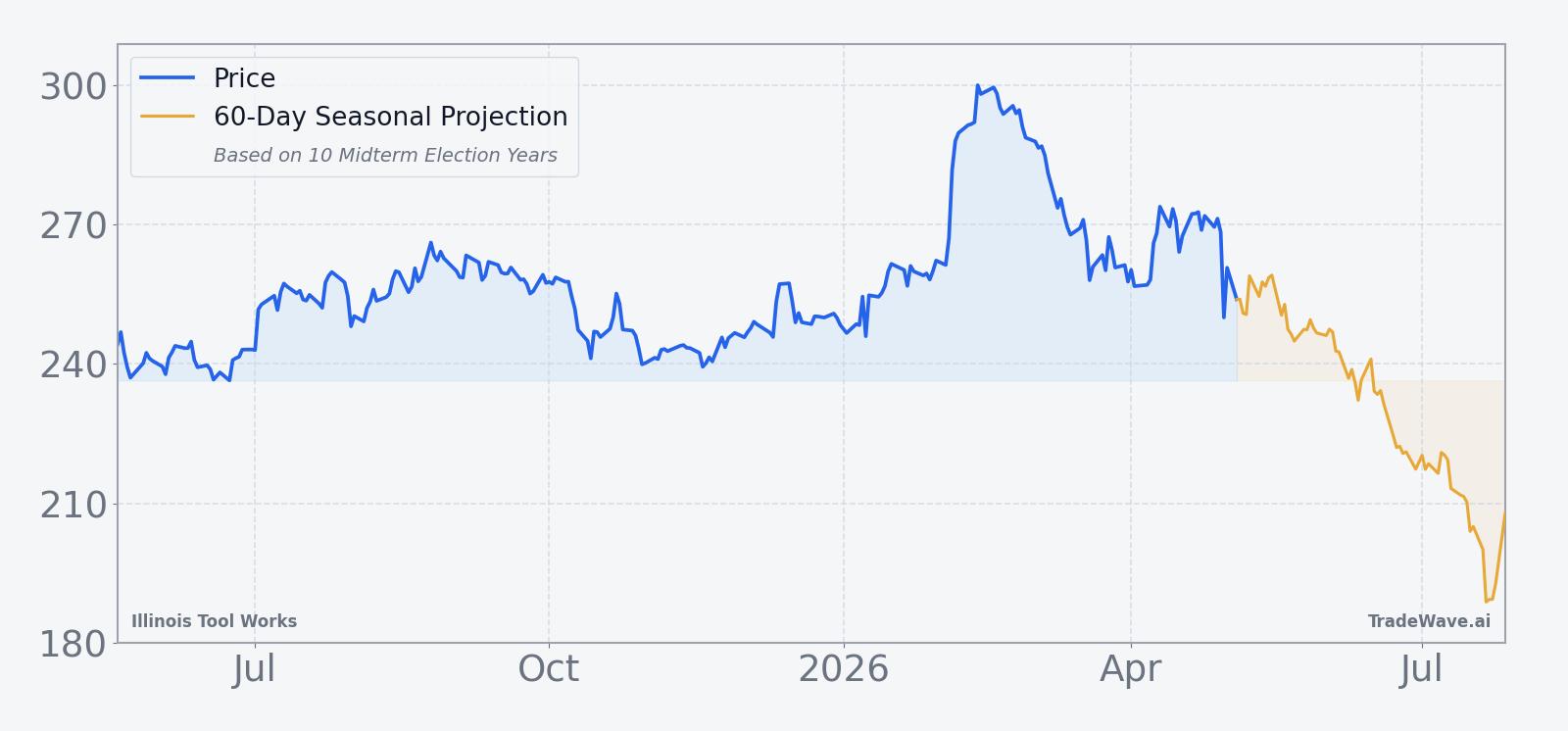
From a broader industrials-sector seasonal outlook, ITW’s current position below its 50-day moving average but above its 52-week low leaves room for both relief rallies and further downside as macro data and policy headlines evolve. With no near-term earnings date or major company-specific catalyst flagged in the latest data, the stock pattern analysis around this Illinois Tool Works trading window may take on outsized importance for traders looking to frame risk into early summer.
What should traders watch as this Illinois Tool Works window opens?
First, the calendar: the Illinois Tool Works seasonal pattern window starts on May 19 and runs for 52 trading days, so price action in the days just before and after that date will show whether the historical midterm-year bias is starting to reassert itself. Second, levels: on the upside, the 50-day moving average near $270 is a key reference, while on the downside, the 52-week low around $228 is the obvious line in the sand for this window.
Third, volatility inside the window will matter as much as direction. If ITW begins to drift lower in line with the historical pattern but still prints sharp countertrend rallies similar to prior years, traders may see familiar two-way swings that match the historical maximum favorable and adverse excursions. A clean, low-volatility slide would be a departure from the choppier paths seen in several past midterm-year samples.
Finally, watch how any macro or policy headlines tied to industrial demand, infrastructure, or corporate tax and regulation land in the tape during this period. If Illinois Tool Works weakens on those catalysts and trades heavy below the 50-day moving average for most of the window, that would be consistent with the long-run seasonal trend. A sustained break back toward the 52-week high, by contrast, would mark only the second clear failure of this midterm-year Illinois Tool Works seasonal window in the last 10 cycles.
Sources
About this seasonal analysis
Seasonal pattern data is sourced from TradeWave.ai, which analyzes historical price behavior across annual calendar windows going back up to 30 years. Read the full data methodology or the book The 100-Year Pattern by Afshin Moshrefi (2026 edition). Past performance of seasonal patterns does not guarantee future results. This article is for informational purposes only and does not constitute investment advice.