Textron (TXT) Faces 90% Short-Side Win Rate in Upcoming 27-Day Midterm-Year Window
Textron is trading just below recent highs as it heads toward a late‑May midterm-year window that has often rewarded short sellers and added volatility to the stock.

What is the seasonal pattern for Textron (TXT)?
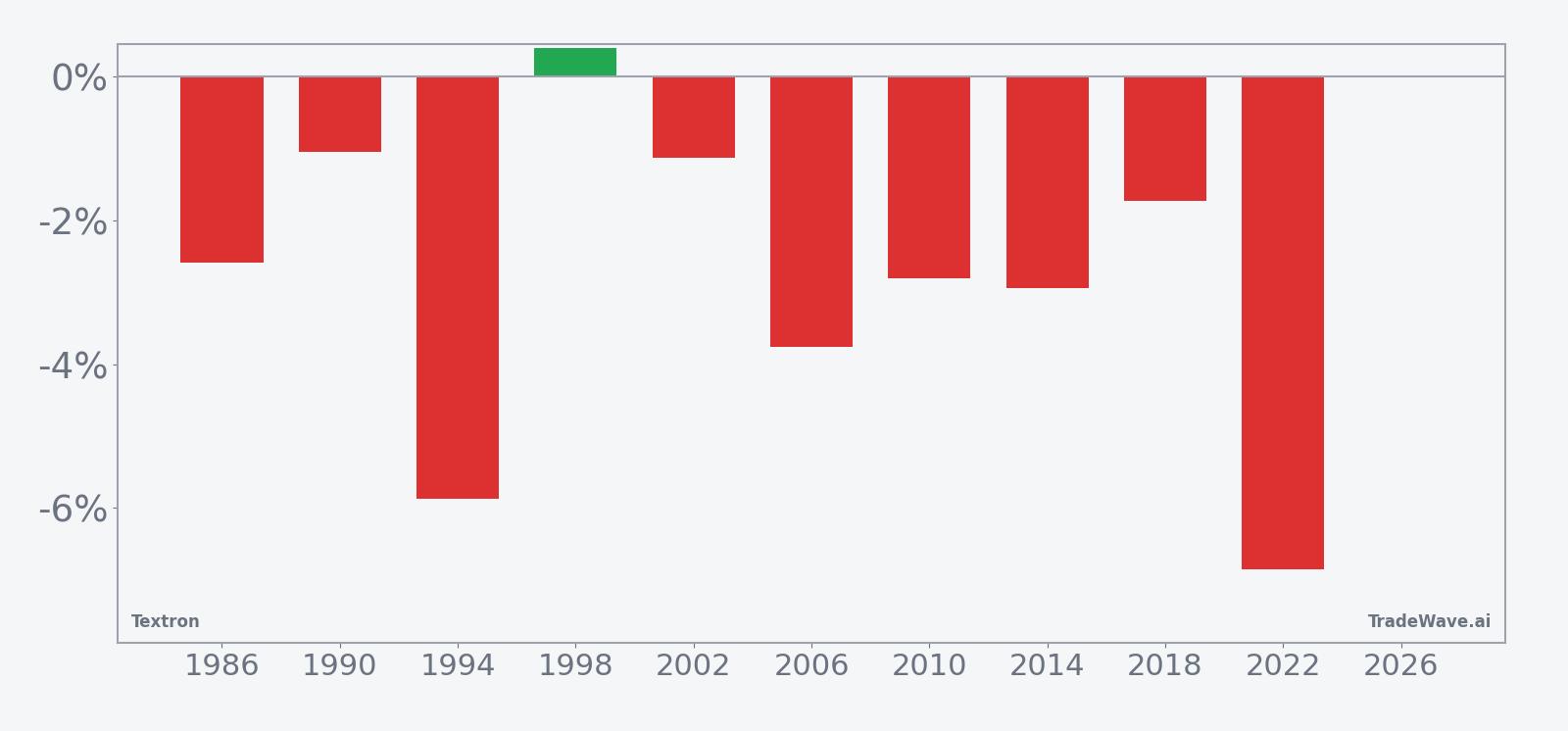
Textron has fallen in 9 of 10 midterm-year late‑May windows during this 27‑day stretch, with an average gain of 3.19% in winning short years.
- 9 for 10 in this window, with winning short years averaging 3.19% gains for the short side.
- The upcoming 27‑day Textron trading window starts on May 30 and clusters in the last 10 midterm election years.
- Percent Profitable is 90%, with 9 winners and 1 loser for the short-direction setup across the sample.
- Average profit across all years is 3%, showing that the single losing year has not erased the pattern’s edge.
- Intraperiod swings have been meaningful, with both strong favorable moves for shorts and notable adverse rallies in several years.
- This TXT seasonal trend has lined up with mid‑cycle policy and defense spending shifts that often hit in early summer.
According to historical data from TradeWave.ai, this late‑May stretch has behaved very differently from an average month for Textron, and the next iteration is just days away.
How has Textron (TXT) traded in this late‑May midterm window?
Textron has dropped in 9 of the last 10 midterm election years during this 27‑day late‑May window, delivering consistent gains for short positions. The stock finished Wednesday at $89.59, up 1.6% on the day and about 11.8% below its 52‑week high of $101.57.[2] That mix of a strong historical short-side pattern and a price still relatively close to the upper end of its one‑year range gives this upcoming Textron trading window unusual weight for both bulls and bears.
Grouping the data by the presidential election cycle matters here because this pattern only looks at the last 10 midterm election years, a phase that often brings budget fights, shifting defense priorities and choppier risk appetite than the pre‑election year that follows. In other words, this is a mid‑cycle slice of the calendar, not a generic May‑June effect, and the Textron seasonal trend reflects that policy backdrop.
This seasonal window begins on May 30 and spans 27 trading days. Historically, during this period, Textron has tended to drift lower, which is favorable for the short trade direction embedded in the pattern. Percent Profitable sits at 90%, with 9 winning short years and just 1 losing year, and the average profit in those winning years is 3.19%, compared with a 3% average when every year is included.
The per‑year table shows that the strongest short-side outcome came in 2022, when Textron fell 6.86% during the window, while the weakest year for shorts was 1998, which posted a small 0.4% gain against the pattern. In 2006, the stock dropped 3.76% over the window, but not before a sizable intraperiod rally that would have tested short conviction. That mix of mostly modest net declines and a few deeper drops is what drives the 31% cumulative return figure across the 10 midterm cycles.
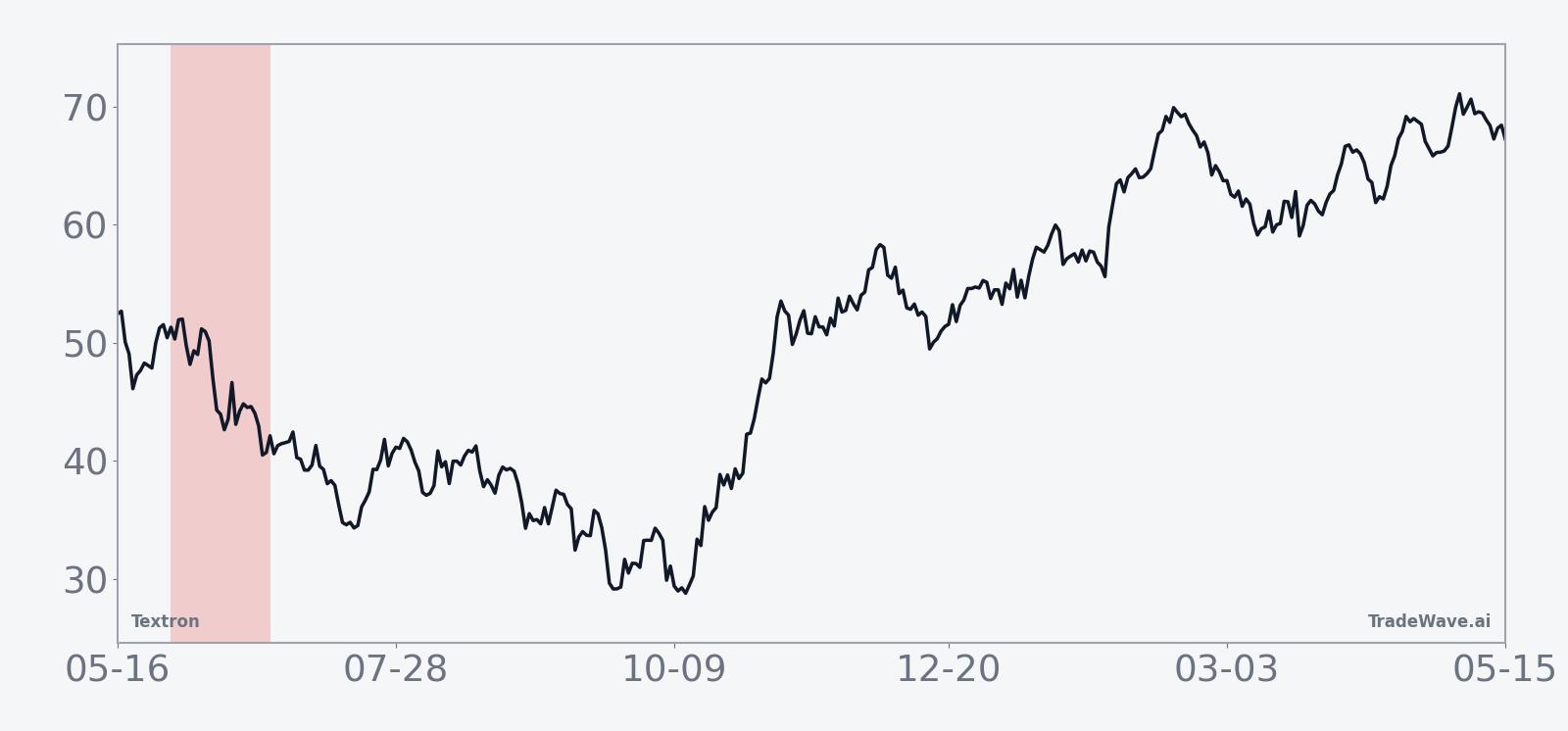
The historical seasonal average suggests that much of the short-side edge has come from a fairly steady grind lower rather than a single air pocket. The curve slopes down across most of the window, with only brief countertrend bumps, which lines up with the Trend Short counts that dominate both the full window and the early sub-window.
Yearly net and peak moves highlight how often shorts have seen both favorable follow‑through and meaningful intraperiod rallies.
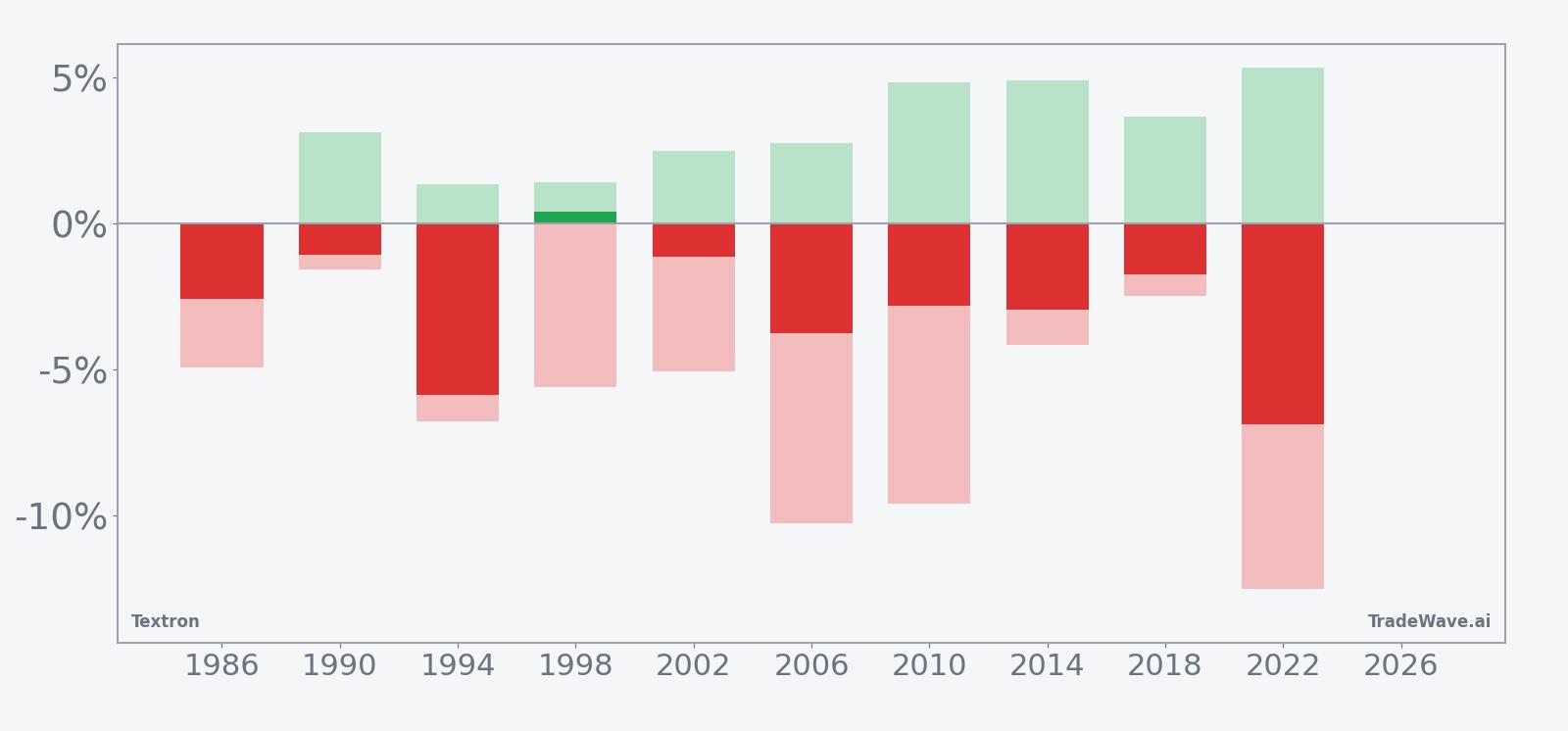
The combined net, maximum favorable move and maximum adverse move bars show that even in winning short years, Textron has often staged rallies of 3% to 5% inside the window before rolling over, while the worst drawdowns for shorts have reached roughly 10% to 12% in years like 2006 and 2022. That profile fits a high‑variance but directionally consistent setup where patience and risk controls have mattered as much as the overall edge.
History does not guarantee future results; adverse excursions can be large even in winning windows, and traders can lose money following any seasonal pattern.
Why does Textron (TXT) follow this seasonal pattern?
One likely driver is the way midterm election years concentrate budget debates and defense spending headlines into late spring and early summer, which can unsettle aerospace and defense stocks. Analysts have also pointed to institutional portfolio rebalancing around midyear, when managers trim winners and rotate within industrials and defense. For Textron, that combination of policy noise and positioning shifts may help explain why this specific late‑May midterm window has so often leaned in favor of the short side.
What is driving Textron (TXT) today?
Textron shares closed at $89.59 on May 20, up 1.6% on the session, leaving the stock about 11.8% below its 52‑week high of $101.57 and comfortably above its 52‑week low near $71.89.[2] Average 20‑day volume sits around 1.27 million shares, so Tuesday’s roughly 615,000 shares traded represented a quieter session for a name that has already absorbed a major guidance reset earlier this year.[2]
Back on Jan. 28, Textron reported Q4 2025 revenue of $4.18 billion and adjusted EPS of $1.73, both ahead of Wall Street estimates, but the 2026 profit forecast came in below consensus, and the stock sold off in response.[1][2] Management guided to about $15.5 billion in 2026 revenue, up 4.5%, and adjusted EPS of $6.40 to $6.60, shy of the roughly $6.84 analysts had penciled in at the time, even as they highlighted solid demand for business jets, aftermarket services and military tiltrotor programs.[1][2] In the aerospace and defense sector more broadly, stronger defense spending and higher aircraft deliveries have been offset by softer commercial demand, leaving investors to weigh cyclical tailwinds against a more cautious earnings bar for 2026.[2]
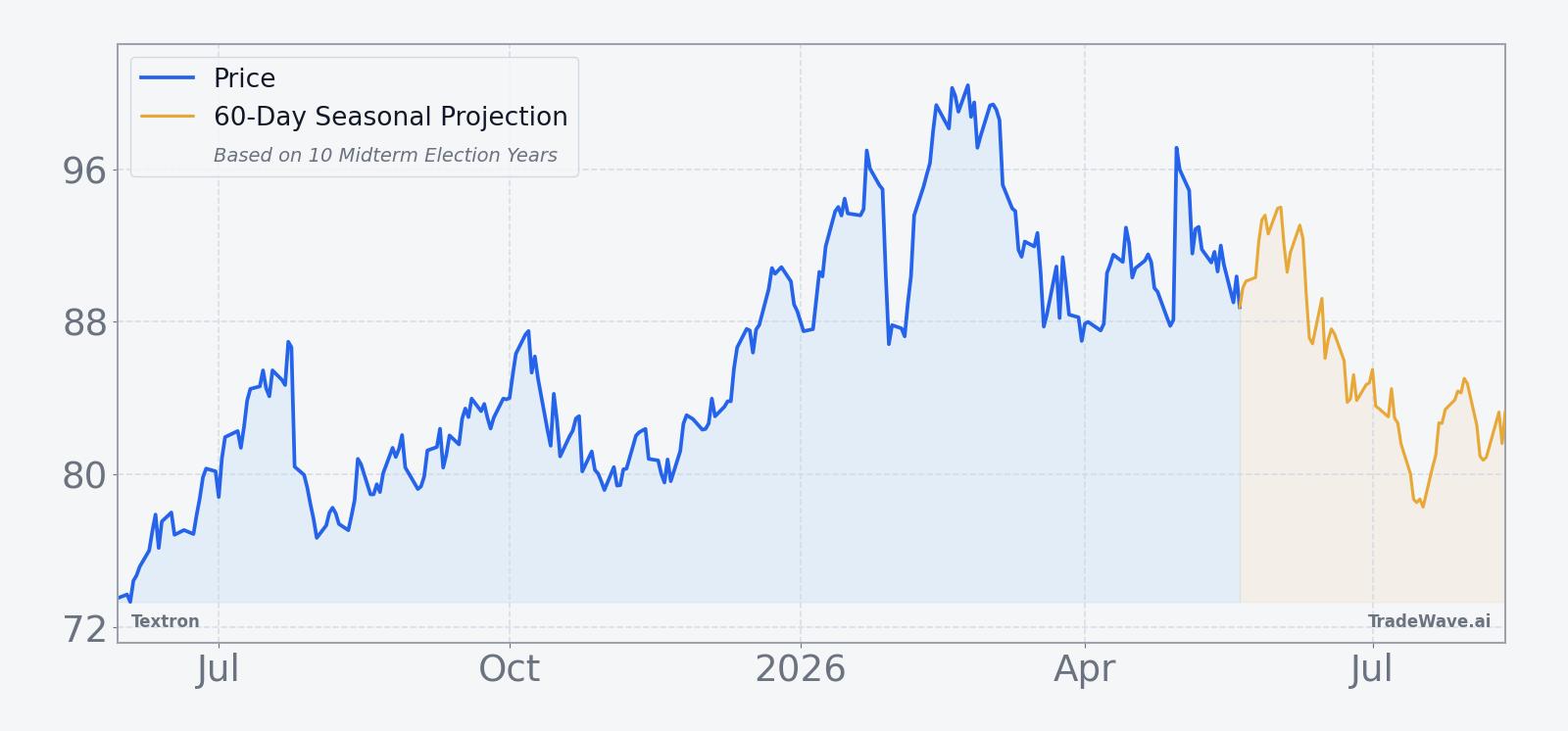
The chart below situates the latest move in its recent multi‑month context and overlays a 60‑day seasonal projection.
What should traders watch in this Textron seasonal window?
First, the calendar: the 27‑day window kicks off on May 30, so price action in the final sessions of May will set the starting point for any seasonal move. Traders will be watching whether Textron holds near the upper band of its recent range or backs off toward its 50‑day moving average around $90.39 as the window opens.[2]
Second, sector headlines matter. Any fresh news on U.S. defense budgets, tiltrotor program milestones or business jet demand could either reinforce or blunt the historical midterm-year softness that has shown up in this TXT seasonal trend.[2] A string of contract wins or upbeat order commentary could fuel one of the rarer losing years for shorts, while renewed concern about 2026 margins or capital spending could line up with the pattern’s typical downside bias.
Third, intraperiod volatility will be key. History shows that even in winning short years, Textron has often rallied several percent inside the window before rolling over, so traders will be watching how any early‑June strength behaves relative to that 3% to 5% rally band. A quick spike followed by heavy selling would fit the historical script, while a sustained breakout through the 52‑week high area would contradict it and signal that this midterm cycle may be different.
Finally, the broader election-cycle backdrop is shifting. Markets are in the midterm election year today, but the pre‑election year that follows has historically been friendlier for risk assets, including industrials and defense. How Textron trades in this late‑May window could set the tone for its role in that next phase: a typical midterm-year dip might reset expectations and valuations ahead of a stronger pre‑election stretch, while resilience here would suggest that investors are already looking through the mid‑cycle noise.
Sources
About this seasonal analysis
Seasonal pattern data is sourced from TradeWave.ai, which analyzes historical price behavior across annual calendar windows going back up to 30 years. Read the full data methodology or the book The 100-Year Pattern by Afshin Moshrefi (2026 edition). Past performance of seasonal patterns does not guarantee future results. This article is for informational purposes only and does not constitute investment advice.